
リーディング教材
日本には、6月ごろ雨がたくさん降る季節×Meaning:
Season; a period of the year.
Grammar:
- A noun referring to one of the four seasons or a specific time of year.
Usage:
Used for the main seasons (spring, summer, etc.) or for periods characterized by certain events, like '受験の季節' (juken no kisetsu - exam season).
Examples:
日本の秋はとても美しい季節です。
Japan's autumn is a very beautiful season.
そろそろ桜の季節ですね。
It's almost the cherry blossom season, isn't it?
Register/Formality: Neutral, common noun.があります。これを「梅雨×Meaning:
The rainy season in Japan, typically from early June to mid-July.
Grammar:
- A noun composed of the kanji 梅 (ume - plum) and 雨 (ame - rain).
Usage:
Specifically refers to the East Asian rainy season. It is a major seasonal event in Japan.
Examples:
梅雨の時期は、毎日傘が要ります。
During the rainy season, you need an umbrella every day.
今年の梅雨は長いそうです。
I hear the rainy season will be long this year.
Cultural Context:
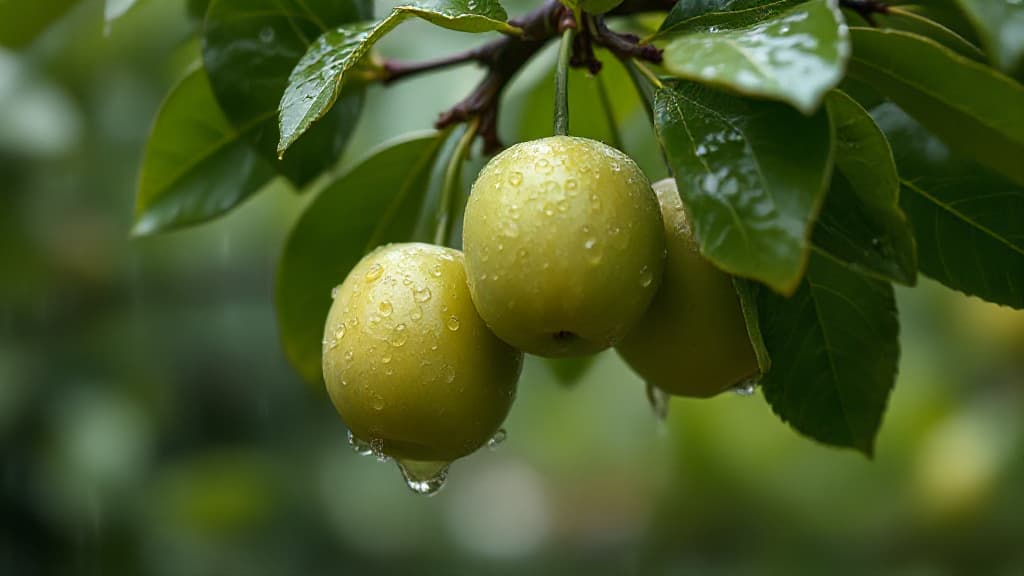
The name 'plum rain' is said to come from the fact that this season coincides with the ripening of Japanese plums, which are used to make 'umeboshi' (pickled plums) and 'umeshu' (plum liqueur).
Register/Formality: Neutral, common noun.」と言います。梅の果物×Meaning:
Fruit.
Grammar:
- A general noun for fruit.
Usage:
Used to refer to any kind of fruit.
Examples:
私は毎朝果物を食べます。
I eat fruit every morning.
この店は新鮮な果物を売っています。
This shop sells fresh fruit.
Register/Formality: Neutral, common noun.が熟す×Meaning:
To ripen; to mature.
Grammar:
- An intransitive Godan verb. This means the subject ripens on its own.
Usage:
Commonly used for fruits and vegetables. It can also be used metaphorically, like '機が熟す' (ki ga jukusu), meaning 'the time is ripe'.
Examples:
庭のトマトが赤く熟した。
The tomatoes in the garden ripened red.
この柿はまだ熟していない。
This persimmon has not ripened yet.
Register/Formality: Neutral.ころだから、この名前がつきました。この季節に、梅干し×Meaning:
Pickled Japanese plum. A traditional preserved food that is typically very salty and sour.
Grammar:
- A noun composed of 梅 (ume - plum) and 干し (hoshi - to dry).
Usage:
Often eaten with rice, put inside onigiri (rice balls), or used as a flavoring.
Examples:
お弁当に梅干しを一つ入れました。
I put one umeboshi in the bento box.
梅干しは夏バテに効くと言われています。
Umeboshi are said to be effective against summer fatigue.
Register/Formality: Neutral, common noun.や梅酒×Meaning:
Plum liqueur, often translated as 'plum wine'. It's a sweet alcoholic drink made from Japanese plums.
Grammar:
- A noun composed of 梅 (ume - plum) and 酒 (shu - alcohol).
Usage:
A popular drink in Japan, which can be served in various ways (on the rocks, with soda, etc.). Many households make their own.
Examples:
自家製の梅酒を飲みませんか。
Would you like to drink some homemade plum liqueur?
食前酒として梅酒を注文した。
I ordered umeshu as an aperitif.
Register/Formality: Neutral, common noun.を作る家も多いです。
「梅雨入り×Meaning:
The start of the rainy season, as officially declared by the weather agency.
Grammar:
- A noun phrase.
- 梅雨 (tsuyu): rainy season
- 入り (iri): entering (from the verb 入る, hairu)
Usage:
Refers to the meteorological announcement that the rainy season has begun for a specific region. The date changes every year.
Examples:
気象庁が関東地方の梅雨入りを発表しました。
The Meteorological Agency announced the start of the rainy season for the Kanto region.
今年の梅雨入りは平年より遅かった。
The start of the rainy season this year was later than average.
Nuance:
This term is based on actual, observed weather patterns, unlike '入梅' (nyūbai), which is a fixed calendar date.
Register/Formality: Neutral.」と「入梅×Meaning:
The start of the rainy season according to the traditional calendar.
Grammar:
- A noun.
- 入 (nyū): to enter
- 梅 (bai): plum (an alternative reading of 'ume')
Usage:
Refers to a specific, fixed day on the old calendar (around June 11th) that traditionally marks the beginning of the rainy season.
Examples:
昔の農家は入梅を目安に田植えの準備をしました。
Farmers in the past prepared for rice planting using 'nyūbai' as a guide.
入梅は暦の上の言葉です。
'Nyūbai' is a term from the calendar.
Nuance:
This is a fixed calendar date, unlike '梅雨入り' (tsuyuiri), which changes yearly based on weather conditions.
Register/Formality: Neutral, a slightly technical or traditional term.」は、どちらも梅雨が始まるという意味ですが、少し違いがあります。
「梅雨入り」は、気象庁×Meaning:
The Japan Meteorological Agency (JMA).
Grammar:
- A proper noun.
- 気象 (kishō): meteorology, weather
- 庁 (chō): government agency
Usage:
Refers to the official government body in Japan responsible for weather forecasting and reporting on natural phenomena like earthquakes and typhoons.
Examples:
気象庁が台風の情報を発表した。
The JMA announced information about the typhoon.
天気予報は気象庁のデータに基づいています。
The weather forecast is based on data from the JMA.
Register/Formality: Formal, official name.が「今日から梅雨です」と発表する×Meaning:
To announce; to present; to make public.
Grammar:
- A 'suru' verb. It is formed by the noun 発表 (happyō - announcement) and the verb する (suru - to do).
Usage:
Used for official announcements, releasing new products or data, or giving a presentation.
Examples:
政府が新しい計画を発表しました。
The government announced a new plan.
彼は会議で研究の結果を発表します。
He will present his research findings at the conference.
Register/Formality: Neutral to formal.ことです。天気×Meaning:
Weather.
Grammar:
- A noun.
Usage:
A general term for the state of the atmosphere (e.g., sunny, rainy, cloudy).
Examples:
今日の天気はどうですか。
How is the weather today?
天気がいいから、散歩に行きましょう。
The weather is nice, so let's go for a walk.
Register/Formality: Neutral, common word.によって毎年日×Meaning:
Every year.
Grammar:
- An adverbial noun.
- 毎 (mai): every
- 年 (toshi/nen): year
- Note: The tagged text '毎年日' appears to be a typo for '毎年' (maitoshi/mainen). The definition is for '毎年'.
Usage:
Used to express that an action or event occurs on a yearly basis.
Examples:
私たちは毎年沖縄に旅行します。
We travel to Okinawa every year.
そのお祭りは毎年8月に行われます。
That festival is held every August.
Register/Formality: Neutral.が変わります×Meaning:
To change; to vary.
Grammar:
- The polite '-masu' form of the intransitive Godan verb '変わる' (kawaru).
- Being intransitive, it means something changes on its own, without a direct actor.
Usage:
Used to describe a change in state, condition, rule, etc.
Examples:
季節が変わります。
The seasons change.
彼の予定はよく変わります。
His plans change often.
Register/Formality: Polite.。例えば×Meaning:
For example; for instance.
Grammar:
- An adverb used to introduce an example.
Usage:
It is placed at the beginning of a sentence or clause to illustrate a point made previously.
Examples:
日本の食べ物が好きです。例えば、寿司や天ぷらです。
I like Japanese food. For example, sushi and tempura.
彼は多くの言語を話せます。例えば、英語、フランス語、スペイン語などです。
He can speak many languages. For instance, English, French, and Spanish.
Register/Formality: Neutral.、東京では、ある年は5月下旬×Meaning:
The last ten days of a month; the late part of the month.
Grammar:
- A noun.
- 下 (ge): lower, bottom
- 旬 (jun): a period of ten days
Usage:
Used with a month name to refer to the period from roughly the 21st to the end of the month. A month is divided into 上旬 (jōjun - early), 中旬 (chūjun - middle), and 下旬 (gejun - late).
Examples:
レポートの締め切りは今月下旬です。
The deadline for the report is the end of this month.
彼は9月下旬に旅行から帰ってきます。
He will come back from his trip in late September.
Register/Formality: Neutral.に、別の年では6月下旬に梅雨入りしました。
一方×Meaning:
On the other hand; while; meanwhile.
Grammar:
- A conjunction used to introduce a contrasting idea or statement.
Usage:
Often used at the beginning of a sentence to show contrast with the previous sentence. It is common in both written and spoken Japanese.
Examples:
兄はスポーツが好きだ。一方、弟は読書が好きだ。
My older brother likes sports. On the other hand, my younger brother likes reading.
この仕事は給料が高い。一方、とても忙しい。
This job has a high salary. On the other hand, it's very busy.
Register/Formality: Neutral to slightly formal.、「入梅」はカレンダーの言葉です。昔の暦×Meaning:
Old calendar; traditional calendar.
Grammar:
- A noun phrase.
- 昔 (mukashi): olden times, the past
- の (no): possessive particle
- 暦 (koyomi): calendar
Usage:
Refers to calendars used in the past, especially the lunisolar calendar used in Japan before the adoption of the Gregorian calendar.
Examples:
昔の暦は月の動きに基づいていました。
The old calendar was based on the movements of the moon.
昔の暦を見ると、季節の移り変わりがよく分かります。
If you look at an old calendar, you can understand the changing of the seasons well.
Register/Formality: Neutral.の専門家×Meaning:
Expert; specialist.
Grammar:
- A noun.
- 専門 (senmon): specialty, major field
- 家 (ka): a suffix for a person with a certain skill or profession
Usage:
Refers to a person with deep knowledge or skill in a specific field.
Examples:
彼は経済の専門家です。
He is an economics expert.
何か問題があったら、専門家に相談してください。
If you have any problems, please consult a specialist.
Register/Formality: Neutral.が決めた日×Meaning:
The decided day; the day that was set.
Grammar:
- A noun phrase where a relative clause modifies a noun.
- 決めた (kimeta): past tense of 'kimeru' (to decide).
- 日 (hi): day.
- The verb 'kimeta' directly modifies 'hi'.
Structure: Verb (past/plain form) + Noun. This is a very common way to describe a noun in Japanese.
Examples:
これは私が予約した席です。
This is the seat that I reserved.
会議の決めた日を忘れないでください。
Please don't forget the day that was decided for the meeting.
Register/Formality: Neutral.で、毎年6月11日ごろです。昔は、農家の人×Meaning:
Farmer; a person from a farming household.
Grammar:
- A noun phrase.
- 農家 (nōka): farm household; farmer
- の (no): particle linking the two nouns
- 人 (hito): person
Usage:
A common way to refer to people who are farmers. The noun '農家' (nōka) can also be used by itself to mean 'farmer'.
Examples:
農家の人は朝早く起きます。
Farmers wake up early in the morning.
私の祖父は農家の人でした。
My grandfather was a farmer.
Register/Formality: Neutral.が田植えの時期×Meaning:
Rice-planting season/period.
Grammar:
- A noun phrase.
- 田植え (taue): rice planting
- の (no): possessive particle
- 時期 (jiki): time period, season
Usage:
Refers to the specific time of year when rice seedlings are transplanted into paddies, a crucial event in Japanese agriculture.
Examples:
田植えの時期はとても忙しいです。
The rice-planting season is very busy.
この地域では、5月が田植えの時期です。
In this region, May is the rice-planting season.
Register/Formality: Neutral.を決める×Meaning:
To decide; to determine; to set.
Grammar:
- A transitive Ichidan verb (ru-verb). The plain/dictionary form. It takes a direct object marked by 'を' (o).
Usage:
A very common verb used for making choices or establishing plans, rules, or dates.
Examples:
昼ご飯に何を食べるか決めましょう。
Let's decide what to eat for lunch.
会議の日付を決める必要があります。
We need to decide the date for the meeting.
Register/Formality: Neutral (dictionary form).目安として使っていました。
このように、「梅雨入り」は実際の天気×Meaning:
Actual weather; real weather conditions.
Grammar:
- A noun phrase.
- 実際 (jissai): actual, real, practical
- の (no): possessive particle
- 天気 (tenki): weather
Usage:
Used to distinguish the real weather from a forecast or a symbolic idea of the weather.
Examples:
天気予報と実際の天気は違うことが多い。
The weather forecast and the actual weather are often different.
実際の天気を考えて、計画を変更した。
I changed the plan, considering the actual weather.
Register/Formality: Neutral.で決まり×Meaning:
To be decided; to be settled. (Conjunctive form)
Grammar:
- This is the stem form (連用形 - ren'yōkei) of the intransitive verb '決まる' (kimaru - to be decided).
- It is used here to connect two clauses, functioning like a '-te' form. 'Aで決まり、B' means 'It is decided by A, and B...'.
Usage:
This conjunctive use of a verb stem is common in written and slightly formal language to create a smooth flow between clauses.
Examples:
会議の日程も決まり、あとは準備するだけだ。
The schedule for the meeting has been decided, and all that's left is to prepare.
犯人が見つかり、事件は解決した。
The culprit was found, and the case was solved.
Register/Formality: Neutral to slightly formal (common in writing).、「入梅×Meaning:
The start of the rainy season according to the traditional calendar.
Grammar:
- A noun.
- 入 (nyū): to enter
- 梅 (bai): plum (an alternative reading of 'ume')
Usage:
Refers to a specific, fixed day on the old calendar (around June 11th) that traditionally marks the beginning of the rainy season.
Examples:
昔の農家は入梅を目安に田植えの準備をしました。
Farmers in the past prepared for rice planting using 'nyūbai' as a guide.
入梅は暦の上の言葉です。
'Nyūbai' is a term from the calendar.
Nuance:
This is a fixed calendar date, unlike '梅雨入り' (tsuyuiri), which changes yearly based on weather conditions.
Register/Formality: Neutral, a slightly technical or traditional term.」は暦で決まる×Meaning:
To be decided by the calendar.
Grammar:
- A relative clause that modifies a noun (in the original sentence, it modifies '言葉' - word).
- 暦 (koyomi): calendar
- で (de): particle indicating the means or basis ('by', 'with').
- 決まる (kimaru): intransitive verb meaning 'to be decided'.
Structure: This phrase '暦で決まる' describes something that is determined by the calendar.
Examples:
その祭りの日付は毎年、占いで決まるそうです。
I hear the date of that festival is decided by fortune-telling every year.
当日のスケジュールは天気で決まります。
The schedule for the day will be decided by the weather.
Register/Formality: Neutral.言葉です。
理解度確認質問
1. 覚える
- 日本の雨がたくさん降る季節×Meaning:
The season when it rains; rainy season.
Grammar:
- 降る (furu): A verb meaning 'to fall' (for rain, snow, etc.). It modifies the noun that follows it.
- 季節 (kisetsu): A noun meaning 'season'.
- Structure: This is a relative clause where the verb 'furu' directly modifies the noun 'kisetsu'.
Usage:
Refers to a period of time characterized by rainfall. In this context, it specifically refers to Japan's rainy season, 'tsuyu'.
Examples:
雨が降る季節は、傘が必須です。
In the season when it rains, an umbrella is essential.
東南アジアには、雨がたくさん降る季節、つまり雨季があります。
In Southeast Asia, there is a season when it rains a lot, in other words, the rainy season.
Register/Formality: Neutral.の名前は何ですか。 - どうして「梅雨」という名前が付きました×Meaning:
Was given; was attached. Refers to how something got its name.
Grammar:
- The dictionary form is 付く (tsuku), a verb with many meanings, including 'to be attached' or 'to be given'.
- The form is the polite past tense (~ました form).
- Structure: The pattern is (名前が)付く 'a name is given'.
Usage:
Used to ask or explain the origin of a name.
Examples:
この犬には「ポチ」という名前が付きました。
This dog was given the name 'Pochi'.
この地域には、その歴史的な出来事にちなんで名前が付きました。
This area was named after that historical event.
Register/Formality: Polite.か。 - 毎年×Meaning:
Every year; annually.
Grammar:
- A noun that functions as an adverb of time.
- It is composed of the kanji 毎 (mai - every) and 年 (toshi/nen - year).
Usage:
Placed at the beginning of a sentence or before a verb to indicate that an action happens every year.
Examples:
毎年、桜を見に行きます。
I go to see the cherry blossoms every year.
この祭りは毎年7月に開催されます。
This festival is held in July every year.
Register/Formality: Neutral, can be used in both formal and informal contexts.天気の様子×Meaning:
State; condition; appearance; situation.
Grammar:
- A noun.
Usage:
A versatile word used to describe the state or condition of things, people, or situations. In the context of weather ('天気の様子'), it means 'the state of the weather' or 'weather conditions'.
Examples:
病気の人の様子を見に行きました。
I went to check on the condition of the sick person.
空の様子から、もうすぐ雨が降りそうだとわかった。
From the look of the sky, I could tell it was about to rain soon.
Register/Formality: Neutral.を見て「梅雨入り」を発表する×Meaning:
To announce; to make public; to present.
Grammar:
- A suru-verb. It is formed by combining the noun 発表 (happyou - announcement/presentation) with the verb する (suru - to do).
Usage:
Used when officially releasing information to the public, such as news, results, or forecasts. It can also mean 'to give a presentation'.
Examples:
政府は新しい政策を発表しました。
The government announced a new policy.
会議で研究の結果を発表する予定です。
I plan to present the research results at the conference.
Register/Formality: Neutral to formal.のはどこですか。 - カレンダーに書かれている×Meaning:
Is written on/in.
Grammar:
- This is the passive, continuous form of the verb 書く (kaku - to write).
- 書かれる (kakareru): passive form, 'to be written'.
- 書かれている (kakarete iru): te-iru form of the passive, indicating a resulting state. 'It has been written and remains so'.
- The particle に indicates the location where something is written (e.g., カレンダーに - on the calendar).
Usage:
Used to describe something that is written down on a surface or in a document.
Examples:
この本に彼の名前が書かれている。
His name is written in this book.
壁に書かれている注意書きをよく読んでください。
Please read the notice written on the wall carefully.
Register/Formality: Neutral. The polite form is 書かれています (kakarete imasu).「入梅×Meaning:
The traditional start of the rainy season.
Grammar:
- A noun.
- Composed of 入 (nyuu - enter) and 梅 (bai - plum, also used for the rainy season 'tsuyu').
Usage:
Refers to the approximate, historical date for the start of the rainy season, which is fixed on the calendar. This is different from '梅雨入り' (tsuyuiri), which is the meteorological announcement based on actual weather patterns.
Examples:
昔の暦では、入梅は6月11日ごろです。
On the old calendar, 'nyuubai' is around June 11th.
入梅の時期になると、農家は田植えの準備を始めました。
When the 'nyuubai' period arrived, farmers began preparations for rice planting.
Cultural Context: This is a term from the traditional East Asian calendar ('zassetsu'). It was historically important for agriculture but is now less relevant for daily life than the meteorological announcement.
Register/Formality: Neutral. It's a specific term related to the calendar.」は、毎年いつごろですか。 - 昔、農家の人×”Meaning:は「入梅」を目安×Meaning:
A guide; a standard; an aim; a rough indication.
Grammar:
- A noun.
Usage:
Used to refer to something that serves as a criterion or guide for making a judgment or decision. It's not a strict rule, but a general benchmark.
Examples:
この料理の調理時間は30分が目安です。
The guideline for this dish's cooking time is 30 minutes.
JLPT N3合格には、漢字を300個覚えるのが一つの目安になります。
To pass JLPT N3, memorizing 300 kanji is one benchmark.
Register/Formality: Neutral.に何をしていましたか。
2. 理解する
- 「梅雨入り」と「入梅」の大きな違いを説明してください×Meaning:
Please explain.
Grammar:
- 説明する (setsumei suru): A suru-verb meaning 'to explain'.
- して (shite): The 'te-form' of する (suru).
- ください (kudasai): A suffix used after the te-form of a verb to make a polite request.
- Structure: (Verb te-form) + ください.
Usage:
A polite way to ask someone to explain something.
Examples:
この文法の意味を説明してください。
Please explain the meaning of this grammar point.
もう一度、ゆっくり説明してくださいませんか。
Could you please explain it again slowly? (more polite)
Register/Formality: Polite.。 - 「梅雨入り」の日はどうして毎年変わる×Meaning:
To change; to vary; to be different.
Grammar:
- An intransitive verb (it doesn't take a direct object).
Usage:
Used to describe something that undergoes a change or is different from something else.
Examples:
季節が変わると、景色も変わる。
When the season changes, the scenery also changes.
彼の意見は日によって変わる。
His opinion changes depending on the day.
Register/Formality: Neutral. The polite form is 変わります (kawarimasu).のですか。 - 文章によると×Meaning:
According to the text/passage/article.
Grammar:
- 文章 (bunshou): noun meaning 'text', 'passage', 'writing'.
- による (ni yoru): a grammar pattern meaning 'according to' or 'based on'.
- と (to): a particle that can mean 'if', 'when', or in this case, it completes the phrase 'according to X...'.
- Structure: (Noun) + によると.
Usage:
Used to cite a source of information, in this case, the written text being discussed.
Examples:
天気予報によると、明日は晴れるそうです。
According to the weather forecast, it will be sunny tomorrow.
この研究によると、睡眠は健康に非常に重要だ。
According to this research, sleep is extremely important for health.
Register/Formality: Neutral to formal. Common in written language and formal speech.、「梅雨」はどんな季節ですか。簡単な言葉で説明してください。 - 「入梅」は、実際の天気×Meaning:
The actual weather.
Grammar:
- 実際 (jissai): noun meaning 'reality', 'actuality'. When used with の, it becomes an adjective meaning 'actual' or 'real'.
- の (no): possessive/modifying particle.
- 天気 (tenki): noun meaning 'weather'.
Usage:
Used to distinguish the real, observed weather conditions from a forecast, prediction, or a fixed date on a calendar.
Examples:
予報は雨だったが、実際の天気は晴れだ。
The forecast was rain, but the actual weather is sunny.
カレンダーの日付と実際の天気は違うことが多い。
The date on the calendar and the actual weather are often different.
Register/Formality: Neutral.と関係がありますか×Meaning:
Is there a relationship?; Is it related?; Does it have anything to do with...?
Grammar:
- 関係 (kankei): noun meaning 'relationship' or 'connection'.
- が (ga): subject marker particle.
- あります (arimasu): polite form of ある (aru), 'to exist' or 'to have'.
- か (ka): question particle.
- Structure: (Noun) + があります 'There is (Noun)'.
Usage:
A common phrase to ask if two or more things are connected or related to each other.
Examples:
この事件とあの事件は関係がありますか。
Are this incident and that incident related?
睡眠不足は、健康問題と深い関係があります。
Lack of sleep has a deep connection with health problems.
Register/Formality: Polite.。 - なぜ、日本の家では梅雨の時期に梅干しや梅酒を作ることが多いのですか。
3. 応用する
- 今年×Meaning:
This year.
Grammar:
- A noun that functions as an adverb of time.
Usage:
Refers to the current year.
Examples:
今年は日本に行きます。
This year, I will go to Japan.
今年の夏は特に暑いですね。
This summer is especially hot, isn't it?
Register/Formality: Neutral.の沖縄×Meaning:
Okinawa.
Grammar:
- Proper noun.
Usage:
Refers to Okinawa Prefecture, the southernmost prefecture of Japan.
Examples:
沖縄の海はとてもきれいです。
The sea in Okinawa is very beautiful.
夏休みに沖縄へ旅行しました。
I traveled to Okinawa during summer vacation.
Register/Formality: Neutral.の梅雨がいつ始まる×Meaning:
When (it) starts.
Grammar:
- いつ (itsu) is an interrogative 'when'.
- 始まる (hajimaru) is an intransitive verb 'to begin'.
Usage:
Used to ask about the start time of an event.
Examples:
映画はいつ始まりますか。
When does the movie start?
パーティーがいつ始まるか教えてください。
Please tell me when the party starts.
Register/Formality: Neutral. The polite form is 始まります (hajimarimasu).か正確に知りたい×Meaning:
(I) want to know accurately/precisely.
Grammar:
- 正確に (seikaku ni) is an adverb 'accurately'.
- 知る (shiru) is a verb 'to know'.
- 知りたい (shiritai) is the 'tai' form of the verb, expressing desire.
Usage:
Expresses a strong desire to know the exact details about something.
Examples:
その時間を正確に知りたいです。
I want to know that time precisely.
試験の結果を正確に知りたいが、まだ発表されていない。
I want to know the exam results accurately, but they haven't been announced yet.
Register/Formality: Neutral. The polite form adds です (desu).です。「梅雨入り」と「入梅」のどちらを調べます×Meaning:
To look up; to check; to investigate.
Grammar:
- The masu-form of the verb 調べる (shiraberu).
Usage:
Used for the action of seeking information using a dictionary, the internet, or by asking someone.
Examples:
言葉の意味を辞書で調べます。
I will look up the meaning of the word in a dictionary.
明日の天気をインターネットで調べましょう。
Let's check tomorrow's weather on the internet.
Register/Formality: Polite.か。 - 友達が「カレンダーに6月11日は入梅と書いてあるから、絶対に×Meaning:
Absolutely; definitely; never (with negative).
Grammar:
- Adverb derived from the noun 絶対 (zettai - absolute).
Usage:
Strongly emphasizes a statement. Can mean 'for sure' with a positive verb or 'absolutely not' with a negative verb.
Examples:
明日は絶対に晴れてほしい。
I absolutely want it to be sunny tomorrow.
彼は絶対に嘘をつかない。
He never tells a lie.
Register/Formality: Neutral, but can sound very strong.雨だよ」と言いました。あなたなら、どのように答えます×Meaning:
To answer; to reply.
Grammar:
- Masu-form of the verb 答える (kotaeru).
Usage:
The act of giving an answer to a question or a reply to a statement.
Examples:
質問に答えてください。
Please answer the question.
彼は私のメールにすぐに答えました。
He replied to my email right away.
Register/Formality: Polite.か。 - あなたは6月に日本へ旅行する計画×Meaning:
A plan to travel.
Grammar:
- 旅行する (ryokou suru) is a suru-verb 'to travel', acting as a clause modifying the noun 計画 (keikaku - plan).
- Structure: Verb (dictionary form) + Noun.
Usage:
Refers to a plan whose content is 'to travel'.
Examples:
来月、京都へ旅行する計画があります。
I have a plan to travel to Kyoto next month.
夏休みに旅行する計画を立てている。
I am making a plan to travel during summer vacation.
Register/Formality: Neutral.があります。雨の天気予報を確認するために、何という言葉でニュースを調べますか。 - あなたの国の雨季(雨が多い季節)について、日本の「梅雨」と比べながら×Meaning:
While comparing.
Grammar:
- ながら (nagara) is a particle attached to the stem of a verb (e.g., stem of 比べます is 比べ) to mean 'while doing X, also do Y'.
- 比べる (kuraberu) means 'to compare'.
Usage:
Indicates that the action of comparing is happening simultaneously with another action.
Examples:
いくつかの商品を比べながら、一番いいものを選んだ。
I chose the best one while comparing several products.
友達と意見を比べながら、問題の解決策を考えた。
I thought about a solution to the problem while comparing opinions with my friend.
Register/Formality: Neutral.短い文を作ってください。 - もしあなたが農家だったら×Meaning:
If you were a farmer.
Grammar:
- もし (moshi) is an adverb that emphasizes a conditional 'if'.
- あなたが農家 (anata ga nouka) means 'you are a farmer'.
- だったら (dattara) is the past conditional form of だ (da), used for hypotheticals.
- Structure: もし + (Clause) + ~たら/だったら.
Usage:
Used to present a hypothetical or counter-factual situation.
Examples:
もし私が鳥だったら、空を飛べるのに。
If I were a bird, I could fly in the sky.
もしあなたが社長だったら、どうしますか。
If you were the company president, what would you do?
Register/Formality: Neutral, conversational.、「梅雨入り」と「入梅」のどちらの情報×Meaning:
Information; news.
Grammar:
- Noun.
Usage:
Refers to data, facts, or news about a particular subject.
Examples:
インターネットでたくさんの情報を集めた。
I gathered a lot of information on the internet.
その事件に関する新しい情報はありませんか。
Is there any new information regarding that incident?
Register/Formality: Neutral.が大切です×Meaning:
(It) is important; precious.
Grammar:
- な-adjective (na-adjective) 大切 (taisetsu) + polite copula です (desu).
Usage:
Used to state that something is important, valuable, or cherished.
Examples:
家族は私にとって大切です。
Family is important to me.
健康が一番大切です。
Health is the most important thing.
Register/Formality: Polite. The plain form is 大切だ (taisetsu da).か。
4. 分析する
- どうして梅雨の始まりについて、「梅雨入り」と「入梅」という二つの言葉があるのだと思いますか。
- 「梅雨入り」と「入梅」が同じ日になることは、なぜ「偶然×Meaning:
Coincidence; by chance.
Grammar:
- Noun, can also function as a な-adjective or an adverb (with に).
Usage:
Describes an event that happens unexpectedly without any plan or reason.
Examples:
駅で偶然、昔の友達に会いました。
I met an old friend at the station by chance.
私たちが同じ日に同じ場所に行くなんて、すごい偶然だ。
It's an amazing coincidence that we are going to the same place on the same day.
Register/Formality: Neutral.」なのですか。 - 「梅雨」という言葉から、昔の日本の生活と自然の間に×Meaning:
Between life and nature.
Grammar:
- 生活 (seikatsu) 'life/livelihood'. と (to) 'and'. 自然 (shizen) 'nature'. の (no) possessive particle. 間 (aida) 'between/space'. に (ni) location particle.
- Structure: AとBの間に (A to B no aida ni) 'in between A and B'.
Usage:
Refers to the relationship or the space that connects human life and the natural world.
Examples:
この祭りには、生活と自然の間の深いつながりが見られます。
In this festival, a deep connection between life and nature can be seen.
昔の人は、生活と自然の間にバランスを保っていた。
People in the past maintained a balance between their lives and nature.
Register/Formality: Neutral.どんな関係があったと考えられますか。 - 今の生活では、どうしてカレンダーの「入梅」より、気象庁が発表する「梅雨入り」のほうが便利×Meaning:
Convenient; useful.
Grammar:
- な-adjective (na-adjective).
Usage:
Describes something that is easy to use, saves time, or makes life easier.
Examples:
コンビニはとても便利です。
Convenience stores are very convenient.
スマートフォンは地図も見られて便利だ。
Smartphones are convenient since you can also see maps on them.
Register/Formality: Neutral. Polite form is 便利です (benri desu).なのでしょうか。 - この文章×Meaning:
Text; passage; writing; article.
Grammar:
- Noun.
Usage:
Refers to a piece of written work, from a single sentence to a full article or essay.
Examples:
この文章の意味が分かりません。
I don't understand the meaning of this passage.
彼は上手な文章を書きます。
He writes good sentences/prose.
Register/Formality: Neutral.は、「梅雨入り」と「入梅」のどちらの情報を重要×Meaning:
Important; significant; essential.
Grammar:
- な-adjective (na-adjective).
Usage:
Used to describe something that has great significance or value. It is often more formal than 大切 (taisetsu).
Examples:
これは会議の重要なポイントです。
This is an important point of the meeting.
お客様の安全が最も重要です。
The safety of our customers is of the utmost importance.
Register/Formality: Neutral to formal.だと考えているように書かれています×Meaning:
Is written.
Grammar:
- The polite, continuous, passive form of the verb 書く (kaku - to write).
- Structure: Verb passive te-form + います. This indicates a resulting state in a polite way.
Usage:
The polite equivalent of 'kakarete iru'. Used in formal or polite contexts to state that something is written somewhere.
Examples:
手紙には感謝の言葉が書かれています。
Words of gratitude are written in the letter.
この説明書には、使い方が詳しく書かれています。
The usage instructions are written in detail in this manual.
Register/Formality: Polite.か。
5. 評価する
- 「梅雨入り」と「入梅」という二つの言葉は、現代の×Meaning:
Modern; contemporary; of the present day.
Grammar:
- 現代 (gendai) is a noun meaning 'the modern era'. The particle の (no) makes it function like an adjective.
- Structure: (Noun) + の to modify another noun.
Usage:
Used to describe things related to the current time period, as opposed to the past.
Examples:
現代のテクノロジーは素晴らしいです。
Modern technology is amazing.
多くの現代の若者はSNSを使っています。
Many young people of today use social media.
Register/Formality: Neutral.日本でも必要×Meaning:
Necessary; needed; essential.
Grammar:
- な-adjective (na-adjective).
Usage:
Describes something that is required or indispensable.
Examples:
旅行にはパスポートが必要です。
A passport is necessary for travel.
この仕事には経験が必要だ。
Experience is necessary for this job.
Register/Formality: Neutral. The polite form is 必要です (hitsuyou desu).だと思いますか。あなたの意見を理由と一緒に×Meaning:
(your) opinion together with the reason.
Grammar:
- 意見 (iken) 'opinion'. を (o) object marker. 理由 (riyuu) 'reason'. と一緒に (to issho ni) 'together with'.
Usage:
A phrase instructing someone to provide not just their opinion, but also the justification for it.
Examples:
あなたの意見を理由と一緒に発表してください。
Please present your opinion together with your reason.
彼はいつも意見を理由と一緒に説明してくれる。
He always explains his opinion together with his reasons.
Register/Formality: Neutral.話してください。 - あなたにとって、「梅雨入り」と「入梅」のどちらの情報がより役に立ちます×Meaning:
To be useful; to be helpful.
Grammar:
- A set phrase. The verb is 役に立つ (yaku ni tatsu). This is its polite (masu) form.
Usage:
Used to say that something is useful or serves a purpose.
Examples:
この辞書はとても役に立ちます。
This dictionary is very useful.
あなたのアドバイスは、きっと彼の役に立ちますよ。
Your advice will surely be helpful to him.
Register/Formality: Polite.か。なぜですか。 - この文章は、外国人にとって分かりやすいと思いますか。その理由×Meaning:
Reason; cause.
Grammar:
- Noun.
Usage:
Refers to the explanation or justification for an action, event, or belief.
Examples:
遅刻した理由を教えてください。
Please tell me the reason you were late.
彼が怒っている理由がわからない。
I don't know the reason he is angry.
Register/Formality: Neutral.は何ですか。 - この文章を読んで、一番面白いと思ったことは何ですか。
- この文章に、梅雨についてどんな情報を加えたら、もっと面白くなると思いますか。
6. 創造する
- あなたが梅雨の時期に日本にいると想像して×Meaning:
Imagine; by imagining.
Grammar:
- The te-form of the suru-verb 想像する (souzou suru - to imagine).
Usage:
The te-form can be used to connect clauses ('imagine, and then...') or as a request (when followed by ください). Here it connects to the main command 'write a diary'.
Examples:
あなたが先生だと想像して、話してください。
Imagine you are a teacher and please speak.
10年後の自分を想像して、目標を立てた。
I imagined myself in 10 years and set a goal.
Register/Formality: Neutral.、短い日記を書いてください。 - 6月にハイキングを計画している友達二人の短い会話を作ってください。会話の中に「梅雨入り」という言葉を必ず入れてください。
- あなたの国の言葉で「梅雨」に一番近い言葉は何ですか。もしなければ×Meaning:
If (it) doesn't exist; if there isn't one.
Grammar:
- もし (moshi) 'if'.
- ない (nai) is the negative of ある (aru - to exist).
- なければ (nakereba) is the conditional 'ba' form of ない.
- Structure: もし + (Clause) + なければ.
Usage:
A conditional phrase used for hypothetical situations where something is absent.
Examples:
質問がもしなければ、次に進みます。
If there are no questions, we will move on to the next item.
お金がもしなければ、それを買うことはできません。
If you don't have money, you can't buy that.
Register/Formality: Neutral to slightly formal.、新しい言葉を作って、その意味を説明してください。 - 梅雨の季節を楽しむための、短い計画を書いてください。(例:家ですること、出かける場所など)
- この文章の内容×Meaning:
Content(s); substance.
Grammar:
- Noun.
Usage:
Refers to the subject matter or substance of a book, speech, conversation, box, etc.
Examples:
この本の内容はとても面白いです。
The content of this book is very interesting.
会議の内容をまとめてください。
Please summarize the content of the meeting.
Register/Formality: Neutral.を使って、友達に出すクイズを二つ作ってください。