
Random Interesting Stuff
A brain-friendly system built on the three specific “keys” to language learning.
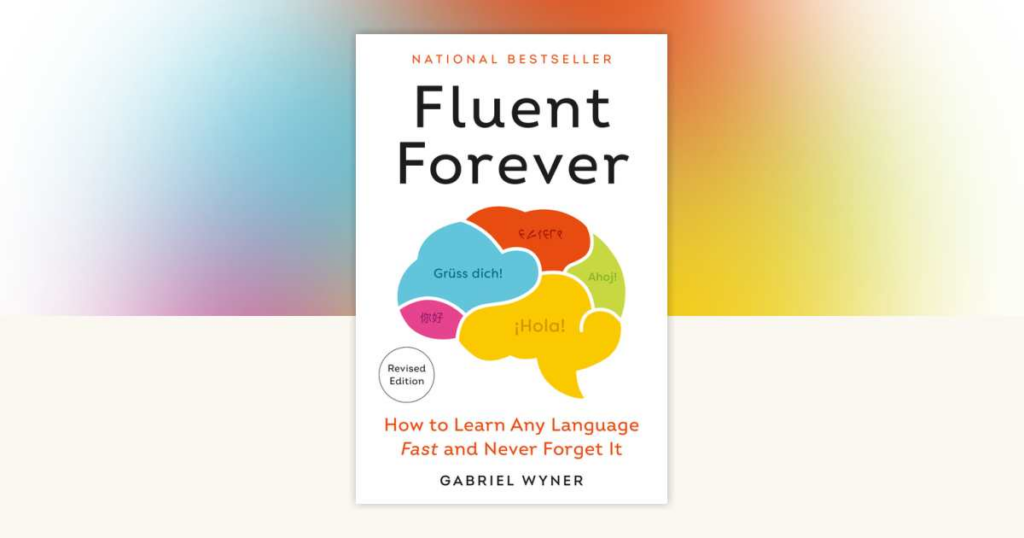
To reach fluency permanently and efficiently, you must synchronize your study with the scientific reality of how the brain wires neurons together. This brain-friendly system is built on three specific keys:
1. Learn Pronunciation First
Training your ears and mouth first attunes your brain to the new sounds of the language. This prevents the “broken word” trap, where you confuse a word’s spelling with an incorrect pronunciation, creating a mental crevice that slows down learning. You can use Minimal Pair Testing—listening to similar-sounding words like “rock” and “lock” with immediate feedback—to physically rewire your brain to hear sounds it has previously learned to ignore.
2. Don’t Translate
Translation is a crutch that forces you to decode sentences word-by-word rather than practicing actual speech. To think directly in the target language, you must bypass English and bind new words directly to images and personal concepts. Searching for words on Google Images helps you discover the “story” behind a word, while linking that image to a personal memory makes the information 50% more memorable by engaging the deepest level of brain processing.
3. Use a Spaced Repetition System (SRS)
An SRS like Anki or the Fluent Forever app acts as “flash cards on steroids,” managing your study schedule so you spend 100% of your time learning and zero time micromanaging. The system relies on three memory principles:
- Active Recall: Testing yourself triggers a “chemical dance” in the brain—releasing dopamine into the hippocampus—which reinforces memory much more effectively than passive review.
- Wait, Wait! Don’t Tell Me!: Testing yourself at the “tip of the tongue” moment—right before you forget—doubles the effectiveness of the test.
- Maximize Laziness: You should only study a concept until you can repeat it once without looking; any extra repetition is “overlearning” and offers no long-term benefit.
By combining these keys, you transform language learning from a tedious chore into a fast-paced game of discovery.
Since we’ve looked at the big picture, would you like to start with some tips on Ear Training to master those first sounds, or should we jump into how to pick your First 625 Words?
What are the five specific scientific principles of memory?
To end forgetting and master a new language efficiently, Gabriel Wyner identifies five core scientific principles of memory:
- Make Memories More Memorable: Memories are formed through interconnected webs of neurons; as Hebb’s Law states, “neurons that fire together wire together”. To ensure information isn’t filtered out by the brain, you must engage the four levels of processing: structure, sound, concept, and personal connection. Linking a new word to a personal history makes it significantly more memorable.
- Maximize Laziness: Rote repetition or “overlearning”—the act of repeating a fact continuously once it is already known—does not help long-term retention. Instead, you should adopt the “lazy” (efficient) route: study a concept only until you can repeat it once without looking, and then stop.
- Don’t Review. Recall.: Passively re-reading lists is “practice for reading,” not retrieving. Active recall (testing yourself) triggers a chemical dance between the hippocampus and amygdala, releasing dopamine that reinforces the memory. Studies show that testing yourself can lead to remembering 35% more information over a week compared to just studying.
- Wait, Wait! Don’t Tell Me!: Memory tests are most effective when they are challenging. Recalling a word that is on the “tip of your tongue” forces the brain to search desperately for the missing piece, making the memory twice as likely to stick permanently once retrieved.
- Rewrite the Past: Every time you recall a memory, you subtly rewrite it by adding your present context—emotions and surroundings—to the old neural network. When you forget, immediate feedback allows you to resuscitate the memory, either by forming a new “original” experience or by allowing the old memory to burst back to life and be rewritten with stronger connections.
These principles are most effectively combined within a Spaced Repetition System (SRS), which automates the timing of your reviews to hit that “tip of the tongue” moment.
Use the Feynman technique to explain Hebb’s Law to a college-educated adult who is learning a foreign language.
Hebb’s Law Explained with the Feynman Technique (for Language Learners)
Let’s explain Hebb’s Law using the Feynman Technique: simple language, a concrete analogy, and direct connection to real language-learning experience.
Step 1: The Simple, Jargon-Free Core Idea
Hebb’s Law is often summarized as:
“Neurons that fire together, wire together.”
In plain English, this means:
When one group of brain cells repeatedly helps activate another group, the connection between them becomes stronger and easier to use the next time.
Your brain strengthens useful connections through successful use. This is one of the basic rules behind learning, habits, and memory.
Step 2: The Analogy (A Forest Path)
Imagine your brain as a dense forest.
You want to get from your home (a sound or word form) to a clearing (its meaning).
- The first time:
There is no path. You push through bushes and branches. It’s slow and awkward.
This is like encountering a new word such as “el escritorio.”
The connection between the sound escritorio and the idea of “desk” is very weak. - Each successful use:
Every time you hear, say, or recall escritorio while thinking of an actual desk, you walk the same route.
Bushes bend. The ground flattens. - After many correct repetitions:
A clear trail forms. You no longer struggle to find your way.
When you see a desk, escritorio comes to mind automatically.
What changed?
The brain connection became more effective.
Over time, that connection can also become physically reinforced, making activation faster and more reliable.
This automatic access is not the whole of fluency, but it is one of its most important building blocks.
Step 3: How This Applies to Language Learning
Hebb’s Law isn’t just about vocabulary. It explains progress across all language skills.
- Vocabulary
Repeatedly link the foreign word chien with the concept of a dog (image, experience, meaning).
The sound and the meaning become tightly connected. - Grammar
When you repeatedly say or hear casa blanca, the word-order pattern itself strengthens.
Spanish adjective placement starts to feel natural, not translated. - Pronunciation
At first, new sounds (like the French “r”) feel unnatural.
Each time you successfully coordinate hearing the sound and producing it, the auditory and motor circuits link more strongly. - Listening Comprehension
Spoken language initially sounds like noise.
With repetition, specific sound patterns (commentallezvous) reliably activate meaning.
The trail becomes clear instead of chaotic.
Step 4: Why Active Practice Works Better Than Passive Study
Hebb’s Law explains why some study methods fail and others succeed.
- Weak connection building (passive):
- Re-reading word lists
- Watching explanations without recalling anything The neurons activate weakly or separately—like studying a map without ever walking the trail.
- Strong connection building (active):
- Actively recalling flashcard answers
- Speaking or writing your own sentences
- Listening and repeating aloud
- Conversing in real time
These methods force the right neurons to activate together successfully, which is exactly the condition required for durable learning.
Practice must be active and mostly correct.
Repeating errors can also strengthen the wrong paths, which is why feedback matters.
Final One-Sentence Summary
Hebb’s Law is the neuroscience behind “practice makes automatic”: each time you successfully use the language, you make the next use easier by strengthening the brain connections that produced it.
If learning feels slow, that doesn’t mean you’re bad at languages—it means you’re walking the trail for the first few times.
Keep walking it, and your brain does the rest.
Explain what this means: “When you do forget, use immediate feedback to ‘rewrite the past’ and resuscitate the memory.”
Memories are not static files stored in a cabinet; they are evolving patterns of connections that you subtly rewrite every time you access them. When you recall a foreign word, you aren’t just retrieving old data; you are merging that past memory with your current thoughts, emotions, and surroundings. This process is the primary engine behind long-term memorization because it causes the neural network associated with that word to grow and strengthen.
When you inevitably forget a word during a review session, immediate feedback—such as flipping a flashcard to see the answer—acts as a rescue mechanism. If the memory was only partially gone (a “tip of the tongue” moment), seeing the answer causes the original neural pattern to burst back to life. Your present experience then merges with that old memory, “rewriting” it with new, stronger connections that make it harder to forget in the future.
In cases where the memory has vanished entirely, immediate feedback allows you to form a brand-new, powerful “original” experience to restart the learning process. By using this system, you ensure that every instance of forgetting is transformed into a strategic opportunity to deepen your knowledge rather than a permanent loss of progress.
Does this explanation of the “resuscitation” process change how you feel about making mistakes during your study sessions? We could move on to discussing how to set up these feedback loops in a digital system like Anki if you’re ready.
What is “The Memory Game”?
The Memory Game is a technique designed to link a new word to a specific personal experience, making it about 50% more memorable. To play, you spend a few seconds searching your mind for a personal memory related to the word—such as a specific person, place, or event—and then add a brief, enigmatic reminder (like a friend’s name) to your flashcard.
This process bypasses your brain’s natural filters by making the word personally meaningful rather than just a generic sound or translation. For example, if you are learning the word for “grandmother,” you would think of your own grandmother’s name or a specific memory of her to “cement” the word in your long-term memory.
You can use specific prompts to link new vocabulary to your past experiences, which makes the words significantly more memorable. For concrete nouns, ask “When was the last time I saw my mère (mother)?” or “When’s the first time I encountered a moto (motorcycle)?”. When learning abstract nouns, try “How has the économie (economy) affected me?”. For adjectives, ask yourself “Am I timide (timid)?” or “What do I own that’s rouge (red)?”. Finally, for verbs, ask “Do I like to courir (run)?” or think of someone you know who does.
Once you find a memory, you should write down a short, enigmatic reminder of it on your flashcard to anchor the connection.
Keeping Flashcards English-free
To keep your flashcards English-free, format your personal reminders as short, “enigmatic” notes on the back of the card. The most effective strategy is to use proper nouns, such as the names of people or specific places associated with the word,.
For example, when learning the word for “cat,” you might simply write “Lily” (the name of your cat) to anchor the target language word and image to your specific memory. These reminders serve as “triggers” that prompt your brain to relive an experience without relying on a formal translation. While an occasional English phrase like “last Christmas” is acceptable if necessary, sticking to names and locations is the best way to maintain target-language immersion.
Handling abstract words that don’t have an obvious personal connection
Abstract words like “honesty” or “economy” are challenging because they lack the immediate sensory “parade of sensations” that concrete words like “cookie” provide. When you can’t find an obvious personal connection, you can use these four strategies to make them stick:
- Find Concrete Symbols: Use Google Images to discover how the target language visualizes the concept. For “economy,” you might find images of piggy banks, stock charts, or politicians to serve as a concrete anchor.
- The “Blank” Method: Use fill-in-the-blank sentences to define the word by its context. Instead of a translation, learn “honest” as the word that fits in the sentence: “Abraham Lincoln was an _____ man”.
- Monolingual Definitions: Once you reach an intermediate level, use a monolingual dictionary to find short, simple definitions in the target language. This builds a neural web of related words rather than relying on English.
- Create a “Negative” Connection: If you truly have no memory for a word, make that fact the connection. For example, you can remember the number 32 by deciding it is “the worst number ever” because you’ve never had a reason to say it.
Using mnemonics for tricky grammar patterns
To master tricky grammar patterns like declensions or irregular verbs, you use a reactive strategy called “Pick a Thing”. Instead of memorizing every rule upfront, you only create a mnemonic when you consistently struggle to remember a specific pattern during your flashcard reviews.
Steps for “Pick a Thing”:
- Identify the Pattern: Notice a repeating rule you keep missing, such as German plurals that end in -en.
- Choose a “Thing”: Select a person or object that sounds like or represents the rule. For the -en ending, you might pick an ENgine, an ENvelope, or the singer ENya.
- Create a Story: Integrate that “Thing” into the sentence on your flashcard. If you are learning that the plural of Student is Studenten, imagine a student joyriding on a giant, exploding engine.
- Make it Vivid: Use “sex, violence, or comedy” to make the mental image unforgettable. If the story is too boring, your brain’s filters will discard it.
By associating one “Thing” with a whole category of grammar, you only need to remember the story to recall the correct word form.
Writing Your Own Sentences
Writing your own sentences is the ultimate personalized class because it reveals exactly which words and grammar rules you are missing for real-life communication.
To start, follow these steps:
- Choose an “Island”: Pick a narrow topic you love, such as a hobby or your job, to ensure the sentences are personally meaningful and memorable.
- Model Your Sentences: Use example sentences from your grammar book as templates. For example, if the book says “The bird is blue,” you might write “My car is blue”.
- Keep it Simple: Start with “short, dumb sentences” (2–5 words long) to avoid overwhelming yourself with too many new concepts at once.
- Use Tools for Support: If you lack the vocabulary to finish a thought, use Google Translate or AI like ChatGPT to bridge the gap.
- Get Native Feedback: Submit your drafts to language exchange communities like LangCorrect.com or Journaly.com. Alternatively, bring a list of 25 sentences to an italki tutor to have them corrected into natural-sounding speech.
- SRS Integration: Immediately turn every correction into a fill-in-the-blank flashcard in your Spaced Repetition System. This ensures you never make the same mistake twice and transforms your personal stories into permanent memories.
