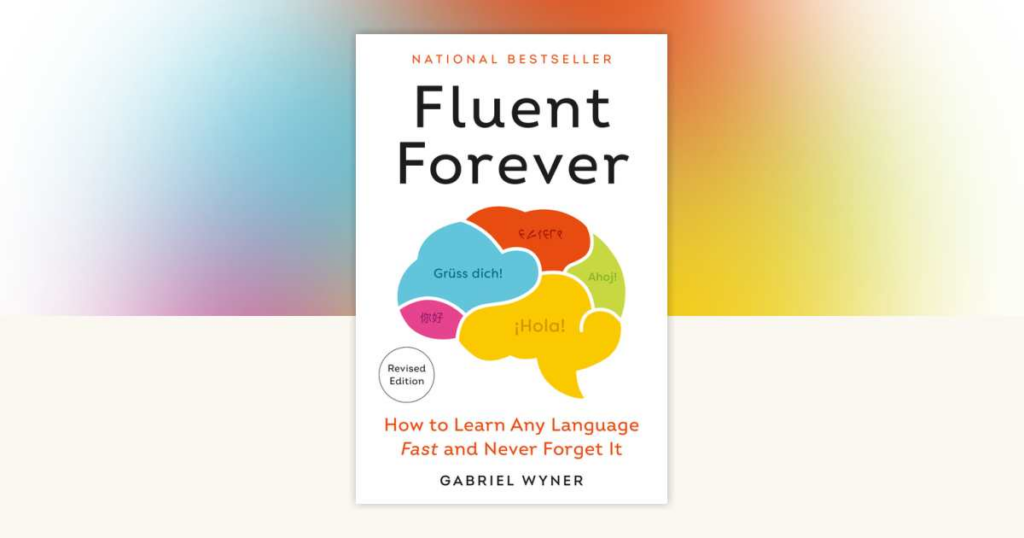

Chapter 3: Prioritizing Pronunciation
Applying the Minto Principle to Chapter 3 of Fluent Forever structures the argument for prioritizing pronunciation into a logical hierarchy.
The Introduction (SCQA)
- Situation: Learners aim to master both the written and spoken forms of a new language.
- Complication: If you don’t master the sounds first, you create “broken words”—a crevice between how a word is written and how it is actually spoken, leading to confusion and doubled effort.
- Question: How can you bridge this gap and accelerate the learning process?.
- Answer: You must master the language’s sound system early through ear, mouth, and eye training.
Pyramid Level 1: The Governing Thought
Mastering pronunciation first synchronizes your ears, mouth, and eyes, ensuring every future word you read reinforces what you hear and vice versa.
Pyramid Level 2: The Three Supporting Pillars
- Ear Training (Rewiring the Brain): Use “Minimal Pair Testing” with immediate feedback to force your brain to distinguish between sounds it has previously learned to ignore.
- Mouth Training (Physical Mastery): Treat the mouth as a set of muscles. Use the International Phonetic Alphabet (IPA) as a “decoder” for tongue, lip, and vocal cord positions and “back-chaining” to automate difficult sound combinations.
- Eye Training (Pattern Recognition): Internalize the specific patterns connecting a language’s spelling system to its sounds to avoid the “broken word” trap and build literacy alongside speech.
Pyramid Level 3: Practical Implementation
- Use Feedback Tools: Leverage Forvo for individual word recordings and RhinoSpike for full sentences.
- Leverage the “Learning Paradox”: Approach difficult sounds from multiple angles (spelling, IPA, mouth positions) because learning more bits of information actually makes the core concept easier to retain.
- Automate via SRS: Build or use a “Pronunciation Trainer” in your Spaced Repetition System to dump this phonetic information into long-term memory.
This structure demonstrates that pronunciation isn’t just about looking “snazzy”; it’s an efficiency tool that prevents your vocabulary from “leaking out of your ears”.
Does this structural breakdown make sense, or would you like to dive into the “Word Play” strategies from Chapter 4 next?
